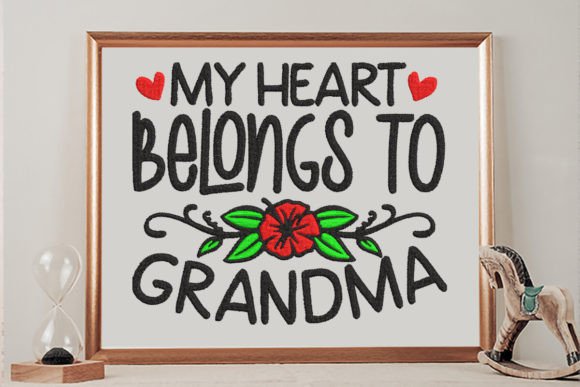
My Heart Belongs to Grandma: A Designer’s Review for Merch
As an embroidery designer who spends countless hours digitizing, testing, and refining files for commercial use, I look at every new design asset through a specific lens. It is not just about how pretty the motif looks on a screen; it is about how it performs under the needle, how it translates to finished goods, and whether it adds value to a small business brand. Today, I am reviewing My Heart Belongs to Grandma, a machine embroidery design that promises whimsy and charm. For small business owners, Etsy sellers, and apparel decorators looking to expand their Grandparents category offerings, understanding the practical application of this design is crucial.
First Impressions: Visual Personality and Brand Fit
When I first loaded the digital embroidery file for My Heart Belongs to Grandma, my immediate assessment focused on its visual weight and emotional resonance. The title suggests a sentimental, classic appeal, while the description hints at a touch of whimsy. In the world of handmade products and boutique merchandise, this combination is powerful but requires careful execution.
The design likely leans towards a friendly, perhaps slightly rustic or elegant aesthetic, depending on the specific stitch work. For a small café, a local bakery, or a florist shop, this design offers a warm, inviting feel that can humanize a brand. It is not starkly modern or corporate; rather, it feels like a handmade product meant to evoke connection. This makes it an excellent candidate for customer gifts, event merch, or branded product add-ons where emotional engagement is the primary goal. However, designers must ask themselves: does this align with their current brand identity? If a brand is strictly minimalist and high-fashion, this whimsical design might clash. But for businesses built on community, warmth, and tradition, it fits seamlessly.
Real-World Business Applications
The true test of any embroidery design is its versatility in production. Here is how My Heart Belongs to Grandma can be leveraged across various small business merch categories:
- Embroidered Patches: One of the most profitable applications for this design is creating embroidered patches. These can be sold as standalone items or attached to denim jackets, backpacks, and tote bags. The sentimental nature of the text makes these patches highly giftable, perfect for holidays like Mother’s Day or Father’s Day.
- Staff Uniforms and Aprons: For a family-owned restaurant or a cozy tea room, adding this design to apron embroidery can create a sense of pride and belonging among staff. It transforms a standard uniform into a branded experience that customers appreciate. It works particularly well as a chest logo accent or a sleeve detail on work shirts.
- Caps and Hats: Cap embroidery is a staple in promotional marketing. Placing My Heart Belongs to Grandma on the front of a cap creates a memorable piece of custom apparel. It is ideal for local events, farmer’s markets, or as part of a gift set sold by a boutique.
- Tote Bag Design: Tote bags are ubiquitous in the handmade market. This design adds a personal touch to canvas totes, making them suitable for grocery shopping, library visits, or as branded giveaways at craft fairs. The whimsy mentioned in the description ensures the bag stands out against more generic designs.
- Product Packaging Accents: Don’t overlook the power of packaging. A small embroidered label featuring this design sewn onto a garment tag or a fabric pouch used for shipping adds a premium feel to the unboxing experience, boosting customer trust and recognition.
Strategic Placement and Scale
When planning the production run, placement is key. For smaller items like caps, the design should be centered on the front panel to ensure visibility. On larger items like aprons, consider placing it on the bib area or near the pocket for a balanced look. For tote bags, a central chest placement or a corner accent both work well, depending on the desired aesthetic. Remember to create a printable mockup for client approval before committing to bulk production, ensuring the visual consistency matches your vision.
Where Caution Is Required
Not every design suits every application. As a professional, I advise exercising caution in the following scenarios when using My Heart Belongs to Grandma:
- Small Patch Sizes: If you plan to produce very small patches (under 2 inches), ensure the lettering remains legible. Tiny details can get lost in the stitching process, leading to a blurry or muddy appearance.
- Curved Surfaces: Embroidering on curved surfaces like the brim of a cap or the shoulder of a shirt requires advanced hooping techniques. Ensure your digitizer has accounted for distortion, or test extensively on similar materials.
- High Stitch Density: Designs with dense fill stitches can become stiff and uncomfortable, especially on lightweight fabrics. Check the stitch density of the file; if it is too heavy, it may pucker thin cotton tees or delicate home decor fabrics.
- Textured Fabrics: While textured fabrics like burlap or thick fleece add character, they can obscure fine details. Test the design on your actual target fabric to ensure the whimsy isn’t lost in the weave.
- Frequent Washing: For items like aprons and uniforms that undergo frequent laundering, ensure the design is anchored properly. Loose threads or poor underlay can lead to premature wear, damaging the brand’s reputation for quality.
Technical Considerations for Production
To avoid common pitfalls, follow these practical embroidery designer notes during your production setup:
- Test in Black and White: Before selecting thread colors, view the design in black and white. This helps you assess the balance of positive and negative space without the distraction of color.
- Review Thread Color Contrast: Ensure there is sufficient contrast between the thread colors and the base fabric. Low contrast can make the design hard to read, especially in dim lighting.
- Inspect Spacing: Check the spacing between letters and elements. Tight spacing can cause thread breaks, while wide spacing can make the design look sparse.
- Confirm Hoop Size: Verify that the design fits within your standard hoop sizes. If it exceeds them, you will need to rehoop, which increases labor time and potential alignment errors.
- Use Proper Stabilizer: Always match the stabilizer to the fabric weight. Lightweight fabrics need tear-away or cut-away stabilizers to prevent shifting, while heavier fabrics may require less support.
- Commercial Licensing: Most importantly, confirm the commercial licensing terms of the digital embroidery file. Ensure you have the right to sell finished products made with this design, as some licenses restrict resale or limit the number of units produced.
Impact on Brand Identity and Customer Trust
Using a design like My Heart Belongs to Grandma does more than just decorate fabric; it communicates values. When a customer sees this design on a product, they perceive warmth, care, and attention to detail. This enhances the perceived value of the item, allowing for potentially higher price points. It signals that the brand understands the importance of personal connections, which resonates deeply with buyers of handmade goods and boutique items.
Furthermore, consistent use of such charming designs across different product lines—such as matching aprons, hats, and tote bags—creates a cohesive visual identity. This professionalism builds trust, encouraging repeat purchases and word-of-mouth referrals. In a crowded marketplace, these subtle touches of personality can be the deciding factor for a buyer choosing one small business over another.
Final Verdict for Designers and Sellers
My Heart Belongs to Grandma is a versatile and emotionally engaging design asset that holds significant potential for small business merchants. Its whimsical yet classic nature makes it suitable for a wide range of applications, from embroidered patches and staff uniforms to tote bags and cap embroidery. However, success depends on proper technical execution, including appropriate stitch density management, correct stabilizer usage, and careful consideration of fabric texture.
By treating this design as a strategic brand tool rather than just a decorative element, you can enhance your product line, boost customer engagement, and strengthen your brand identity. Always remember to test thoroughly, respect licensing agreements, and prioritize quality control to ensure that every finished product reflects the professionalism and charm that your customers expect.